
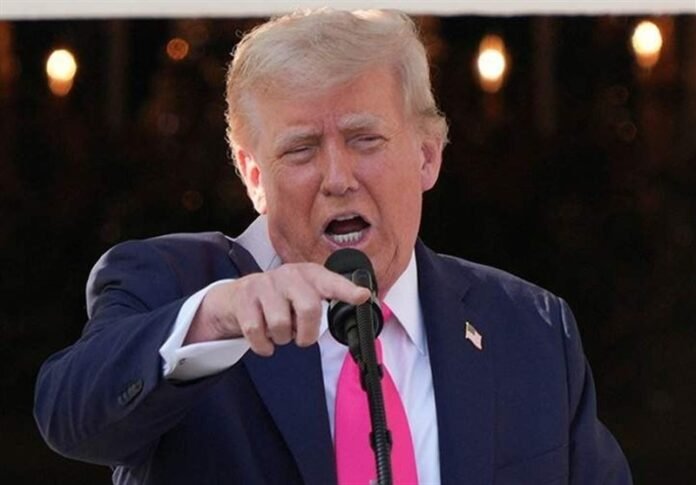
Once more, the US is taking credit for “de-escalations” in hotspots around the world, citing Iran and Israel, Rwanda and the Democratic Republic of the Congo, and India and Pakistan. This recurrent claim, which is frequently emphasized by leaders such as President Donald Trump, is in direct opposition to India’s position on its own de-escalation with Pakistan.
Washington has reiterated its claim that the Trump administration was instrumental in the recent “de-escalations” between Pakistan and India. This assertion is a part of the United States’ larger effort to mediate conflicts and promote amicable settlements throughout the world. “Across the globe, the United States continues to work with parties to disputes, wherever possible, to find peaceful solutions,” said U.S. Representative Ambassador Dorothy Shea during an open debate on “Multilateralism and Peaceful Settlement of Disputes” at the UN Security Council, which was presided over by Pakistan.
U.S. De-escalation Claims
Speaking at a meeting chaired by Pakistan’s Deputy Prime Minister and Foreign Minister Ishaq Dar, Ambassador Shea emphasized that U.S. leadership had achieved “de-escalations between Israel and Iran, between the Democratic Republic of Congo and Rwanda, and between India and Pakistan” in just the last three months. “Under President Trump’s leadership, the United States played an important role in encouraging the parties to reach these resolutions, which we applaud and support,” she continued. Additionally, Washington called on all UN members engaged in disagreements or conflicts to follow these lead and work toward amicable settlements.
India’s Firm Rebuttal
Trump and his administration have made repeated claims since May 10 that the U.S. president “helped settle” tensions between India and Pakistan, implying that he assured the nuclear-armed neighbors that America would engage in “a lot of trade” with them if they stopped fighting.
But New Delhi has repeatedly told Washington that Islamabad made the ceasefire request and made it clear that no mediation would be accepted. Ambassador Parvathaneni Harish, India’s Permanent Representative to the United Nations in New York, adamantly refuted the American narrative on Wednesday. He pointed out that India had started “Operation Sindoor,” a targeted, methodical, and non-escalating operation against terrorist camps in Pakistan and Pakistan-occupied Jammu and Kashmir (PoJK). “A cessation of military activities was directly concluded at the request of Pakistan upon achieving its primary objectives,” Ambassador Harish explained.
“There cannot be one standard approach to dispute resolution,” he emphasized further. Any such endeavors must also take into consideration the context and evolving conditions. As a responsible actor and a founding member of the UN, India has consistently worked constructively with allies, particularly at the UN, to work together for a more just, equitable, peaceful, and prosperous world.
China’s maritime claims are condemned by the U.S.
Washington also denounced China’s “expansive and unlawful” maritime claims in the South China Sea, as well as the “dangerous and destabilizing ways it attempts to enforce them,” during the same session. Ambassador Shea reaffirmed the demand that China follow the Arbitral Tribunal’s 2016 decision, which was held in accordance with the 1982 Law of the Sea Convention and is “final and legally binding on China and the Philippines.” She chastised China for failing to fulfill its responsibilities for nine years, rejecting the ruling, interfering with freedoms on the high seas, and making illegal claims that violate the sovereign rights of other littoral states in the South China Sea, such as Brunei, Indonesia, Malaysia, Vietnam, and the Philippines.

